
One of the most popular places to visit at Christmas in London is the Trafalgar Square Christmas Market situated at the center of London at Trafalgar Square. Every year, Trafalgar Square becomes a magical place for Christmas with lots of festive lights and stalls that sell all kinds of Christmas food as well as entertain visitors with live performance shows. This is a place of festive traditions and not a commercial market and it gives visitors an opportunity to feel the Christmas atmosphere with lots of culture, history, and festive magic.
- History and Meaning Behind the Christmas Market
- Atmosphere and What It Feels Like to Visit
- Location, Transport, and Accessibility
- Dates, Timing, and Best Time to Visit
- Food, Drinks, and Shopping Experience
- Nearby Attractions and Christmas Walking Routes
- Travel Tips and Visitor Advice
- (FAQs)
- 1. Where is the Christmas market located?
- 2. When does it usually take place?
- 3. Is entry free for visitors?
- 4. What is the main attraction?
- 5. What food can visitors enjoy?
- Conclusion
History and Meaning Behind the Christmas Market
The origins of this festive event are closely tied to post-war history and international friendship. The most important symbol is the large Christmas tree placed in the center of the square each year.
This tree is traditionally gifted by Norway as a thank-you gesture for Britain’s support during World War II. This tradition has continued since 1947 and remains one of the most meaningful Christmas customs in London.
Over time, the square has evolved into a seasonal gathering place for locals and tourists. While it is not a large commercial market, it has become a symbol of unity, peace, and celebration during winter.
The combination of history and modern festive culture makes it unique compared to other Christmas markets in Europe.
Atmosphere and What It Feels Like to Visit
The atmosphere is a mix of excitement, warmth, and winter charm. During December, the square feels completely different from its usual busy city life.
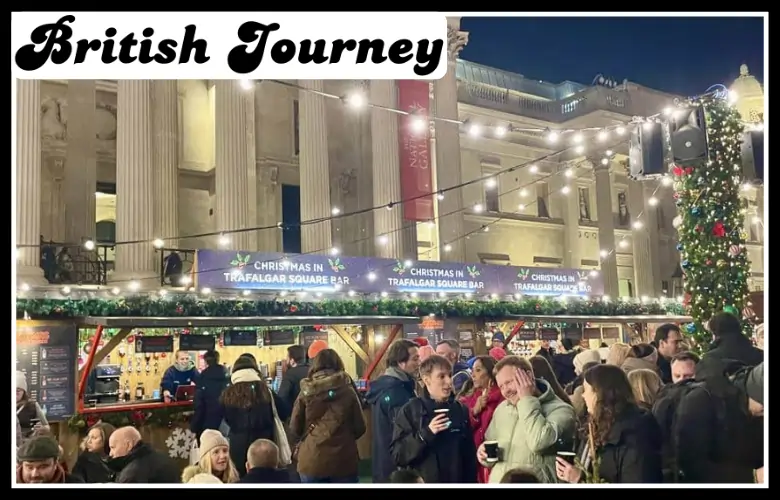
Lights wrap around the square, and the giant Christmas tree stands glowing at the center. Music plays softly in the background, often coming from live performers or choirs.
Street musicians, seasonal decorations, and small stalls create a lively but not overwhelming environment. It feels festive, but still open and relaxed.
The surrounding buildings, including the National Gallery, add a cultural backdrop that enhances the entire experience. The architecture, combined with Christmas lights, creates one of the most photographed winter scenes in London.
Many visitors describe it as a short but memorable stop that captures the true spirit of Christmas in the city.
Location, Transport, and Accessibility
The market is located in central London, making it extremely easy to reach from almost anywhere in the city. It sits in Zone 1, which is the most connected transport area in London.
The nearest station is Charing Cross, which is only a few minutes’ walk away. Leicester Square and Embankment stations are also close and offer additional access routes.
Buses frequently pass through the area, and many visitors simply walk from nearby attractions.
Because of its location, it is easy to combine with other famous areas such as Covent Garden, Soho, and Westminster. These are all within walking distance and become even more festive during December.
However, this convenience also means heavy crowds during peak hours. Evening time and weekends are especially busy, so planning your visit is important.
Dates, Timing, and Best Time to Visit
The festive setup usually runs from early November to early January, covering the entire Christmas season in London. This gives visitors a long window to experience it.
Opening hours typically start late morning and continue into the evening. The most active period is after 4 PM when the square becomes crowded with visitors.
The experience changes throughout the day. Morning hours are quiet and calm. Afternoon is comfortable for walking and photography. Evenings are the most visually impressive with full lighting and atmosphere.
December weekends are the busiest times, especially close to Christmas Day.
Best time breakdown:
- Morning: quiet, easy walking
- Afternoon: good for photos
- Sunset: best lighting effect
- Evening: full festive experience
- Weekdays: fewer crowds
Food, Drinks, and Shopping Experience
Food is a key part of the experience, even though the market is not very large. The focus is on seasonal comfort food and warm drinks that suit cold weather.
Mulled wine and hot chocolate are among the most popular choices. They are especially enjoyable during cold evening walks around the square.
Street food options include sausages, crepes, waffles, roasted nuts, and other quick snacks. Everything is designed for easy eating while walking.
Shopping stalls offer handmade and seasonal products. You will find Christmas ornaments, candles, scarves, gloves, and small decorative gifts.
Most items are made by independent sellers, giving the market a more authentic and personal feel. Prices are slightly higher than usual due to the central location, but visitors focus more on the experience than shopping value.
What you can expect:
- Hot winter drinks
- Street food snacks
- Handmade Christmas gifts
- Festive decorations
- Winter clothing accessories
Nearby Attractions and Christmas Walking Routes
One of the strongest advantages of visiting this area is the number of nearby attractions within walking distance.
Covent Garden is one of the closest highlights. It features its own Christmas market, decorations, and a large Christmas tree.
Leicester Square is also nearby and offers seasonal lights, entertainment, and a lively evening atmosphere.
Soho provides restaurants and nightlife, while Westminster offers iconic views of Big Ben and the Thames.
The South Bank area is another popular festive destination along the river.
Suggested walking route:
- Trafalgar Square Christmas tree
- Covent Garden festive market
- Leicester Square lights
- South Bank river decorations
This route allows visitors to experience multiple festive locations in a single evening without needing transport.
Travel Tips and Visitor Advice
Visiting this central London attraction is easy, but a few simple tips can improve your experience.
Public transport is the best option. Driving is not recommended due to heavy traffic and limited parking.
London winters are cold, windy, and sometimes rainy. Warm clothing is essential, especially in open areas like Trafalgar Square.
Comfortable shoes are important if you plan to walk to nearby attractions.
Most stalls accept card payments, so carrying cash is not necessary.
Crowds increase quickly in the evening, so earlier visits are more comfortable if you prefer space.
Practical tips:
- Use public transport
- Visit earlier in the day
- Wear warm layered clothing
- Keep belongings secure
- Plan nearby walking routes
(FAQs)
1. Where is the Christmas market located?
It is located in central London at Trafalgar Square. This makes it very easy to access from major transport hubs like Charing Cross, Leicester Square, and Embankment.
2. When does it usually take place?
It typically runs from early November to early January each year. This covers the full festive season, including Christmas and New Year celebrations.
3. Is entry free for visitors?
Yes, entry is completely free. Visitors can walk into the square without tickets and enjoy the festive atmosphere, decorations, and performances.
4. What is the main attraction?
The main highlight is the large Norwegian Christmas tree placed in the center of the square. It has been a long-standing tradition and is gifted annually by Norway.
5. What food can visitors enjoy?
Visitors can enjoy seasonal street food such as sausages, waffles, crepes, roasted nuts, mulled wine, and hot chocolate. These are perfect for cold winter weather.
Conclusion
In summary, the Trafalgar Square Christmas Market is one of the most important Christmas events that anyone interested in experiencing the festive season should visit in the central parts of London. This is because the event is located in the historic environment of Trafalgar Square where you will find all the aspects of Christmas such as the historic Christmas tree from Norway, light decorations and small stalls that give it that Christmas feel. It might not be the biggest Christmas Market in London but its location and cultural significance makes it very special.